An Incidental Portraiture

george7

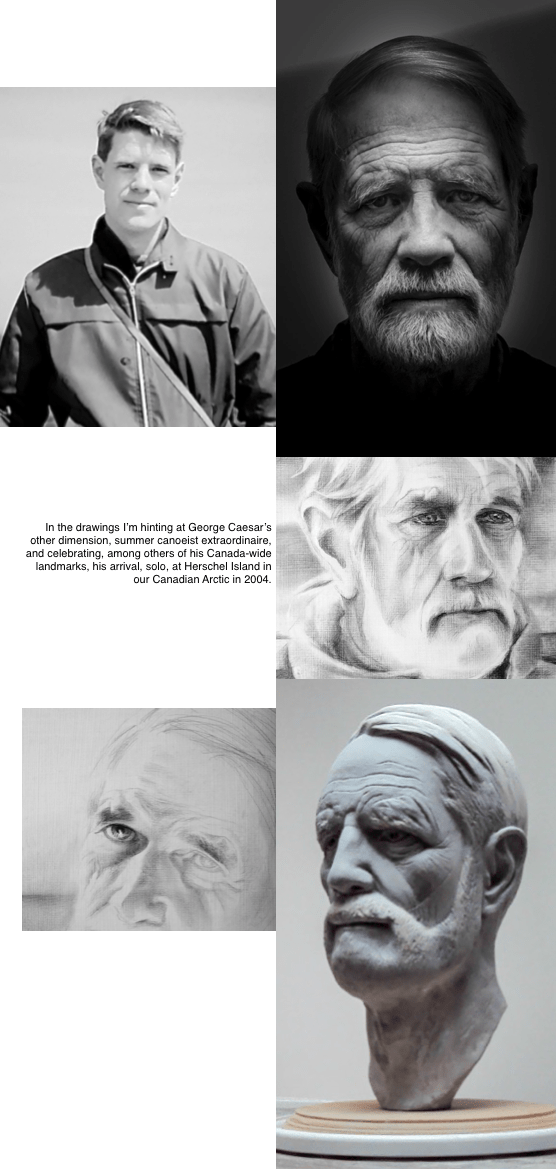
Exactly fifty years separate my two photos here of friend George Caesar.

In the first we were heading out of the Gulf of St. Lawrence, Canada, on a small ocean liner to spend the summer of 1966, along with his brother Bill, yachting in the Baltic and North Seas, and writing and drawing about the adventure for the now defunct Toronto Telegram.

In the second photo, with fifty years having elapsed, we have remained great friends and he is a long-retired Art Teacher, husband, and father of two sons, who themselves are already middle-aged, and I, always a full-time artist, always on the search for arresting images, have at last photographed his impressive face in preparation for some drawings and a sculptural portrait.

Two entire personal histories are summarily here contained along with an incidental, coincidental meditation on Life / Art as Process.

george6

Painted Pencil

jenna1

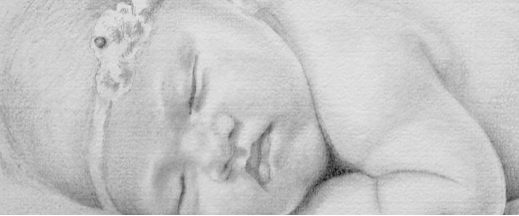
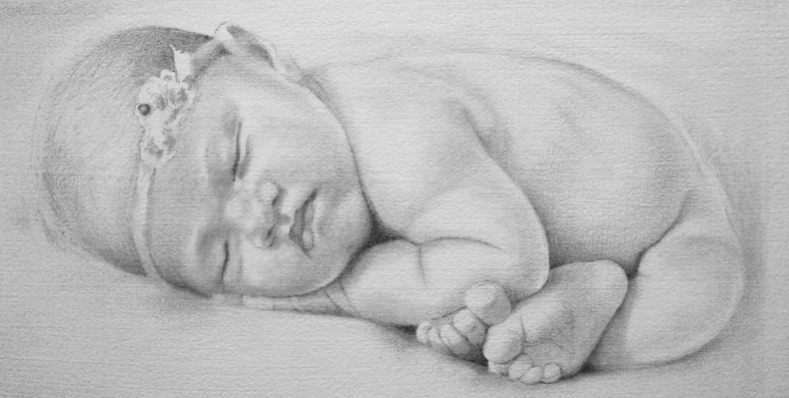
Something very different is happening this time around between pencil, surface, and the line / shade / tone coming forward.

Used a roller as well as a brush—first time—to help prepare the drawing surface and the result is, that beyond the horizontal / vertical weave left by the brush, this time tone also breaks down into a beaded appearance—and demands a significantly different technique: find myself using a cotton swab, as in ear-cotton swab, to spread tone, so the look, of the two drawings on the panel thus far (five more to finish the project), has more in common with painting strokes than with typical pencil shading.  It also allows the white of the panel to glow through the tone in a pleasing immediacy / tactility / subtlety I’d not encountered before in any of my seven decades of drawing.

I’m hoping, perhaps vainly, that the drawing is also exhaustive and incisive and robust enough to offset the cuteness of such a young subject.

jenna2

jenna3

Encore! Encore!

hallowone

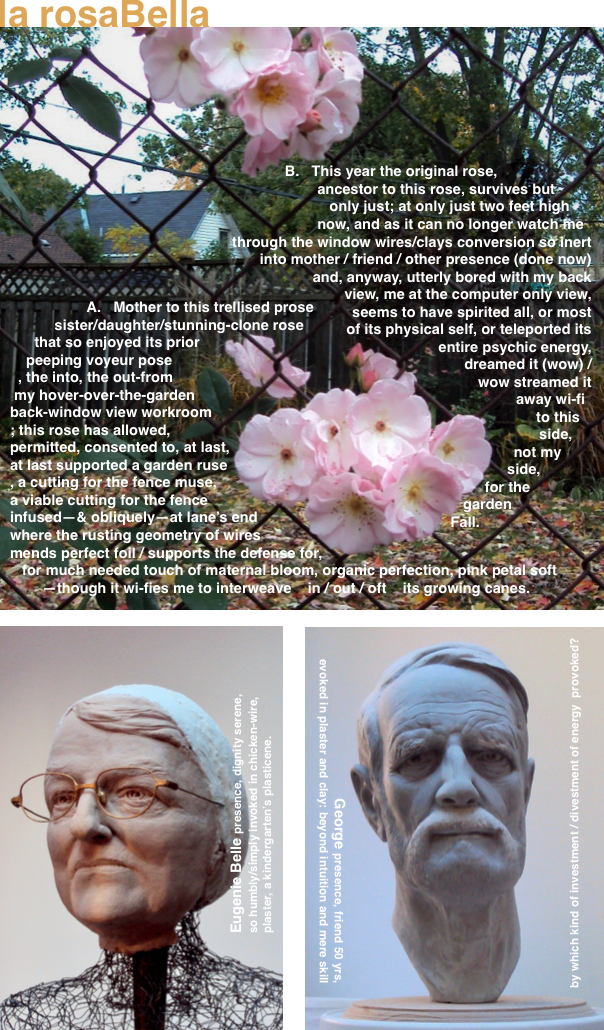
For the several years I frequently worked on two sculptural portraits, a rose, precisely like this one, grew tall enough by each October—about nine feet high—to appear to be checking out the work, and me, from outside my backgarden workroom window.

This year that rose suffered some kind of catastrophic collapse, though a cutting I’d taken from it three years ago finally rooted other side of the yard. My creative anthropomorphic imagination ascribed the notion that perhaps the original had simply wi-fied most of its energy over to its now magnificent clone.

And out of this attribution of a somewhat “spooky action from a distance”: a perfect rose of an idea—that entire cluster of so called supernatural / spooky / inexplicable buds-of- energy-transfer we have often been so scared of, or simply dismissed, or outright damned as the work of the devil: psychic readings, telepathy, teleportation, clairvoyance, intuition, etc., are phonemena accomplished in as logical and natural a way as the one whereby we now transfer most of our data: WI-FI.

In spoof of my assigned anthropomorphism—a spooky Hallowe’en Wi-Fillière.

hallowtwo

Past Tense, Future Tense

flat-is1

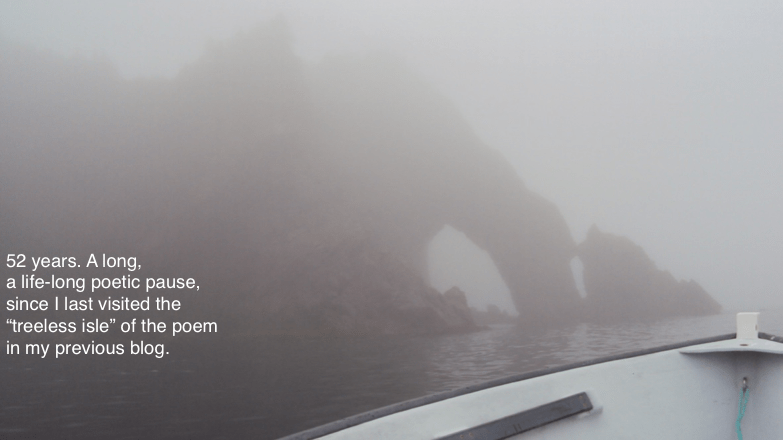
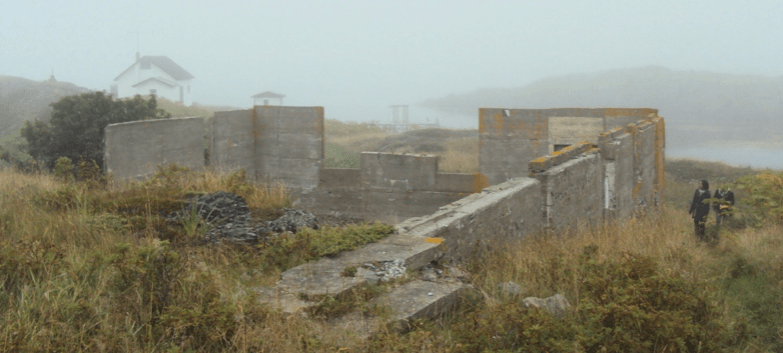
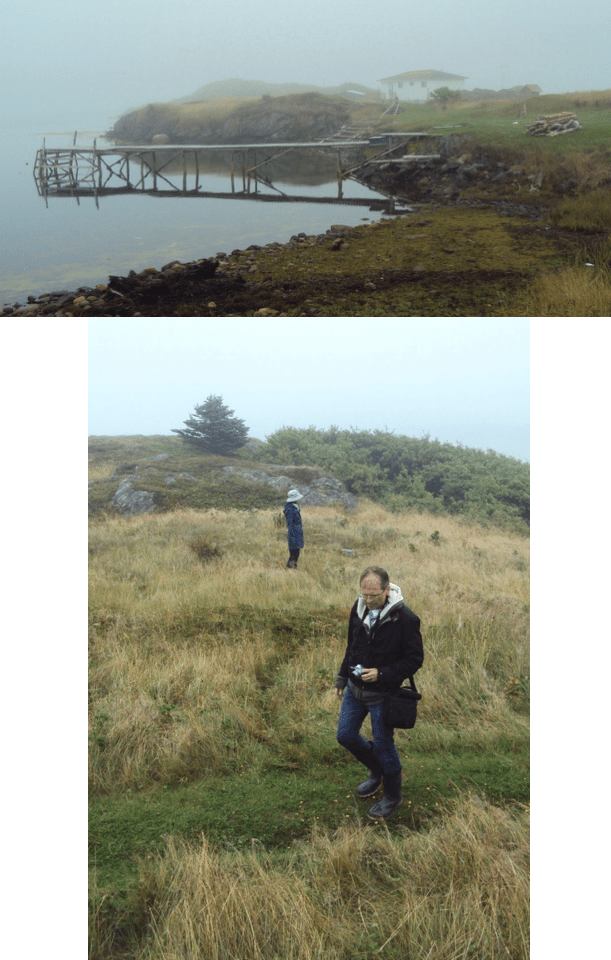
A Placentia Bay, NL fog shrouded this 2016 September visit in continuing mystery, and appropriate poetic timelessness, as we set out across the several kilometers of open ocean to Flat Islands from nearby Red Harbour’s Elephant Head.  This natural landmark is still a spectacular island journey marker carved by wind and wave in a granite headland—but is now ever more delicate, ever more finely undercut.

flat-is2

Lichen encrusted foundations are all that remain of a big United Church that once dominated Flat Island’s harbour.  In its final decade the island was rebranded as Port Elizabeth, to no avail as Government resettlement policies prevailed and all islanders left.

flat-is3

Cousins Brenda and John Ballantyne (Toronto) organized this wonderful excursion/update into our Dicks/Crann family anchors with Port Elizabeth/Flat Islands, Placentia Bay, NL.

flat-is4

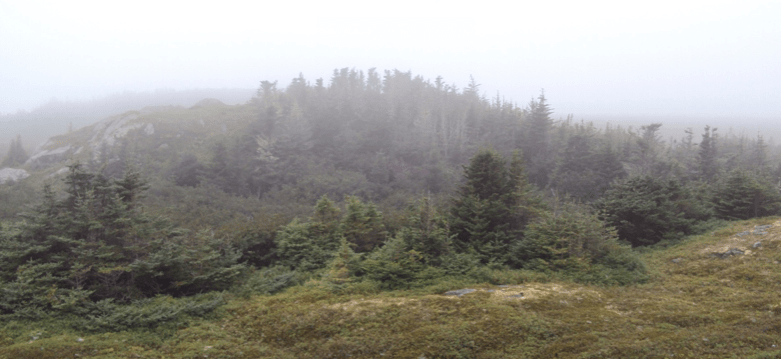
It was surprisingly satisfying, and not at all sad, that despite a few summer cottages, lichens, mosses, grasses, and a steady / sturdy regrowth of low bushes, of fir and spruce trees have set about the long process of reclaiming the island to its more natural state for the first time in about two hundred years: its original wild splendour slowly returns.

flat-is5

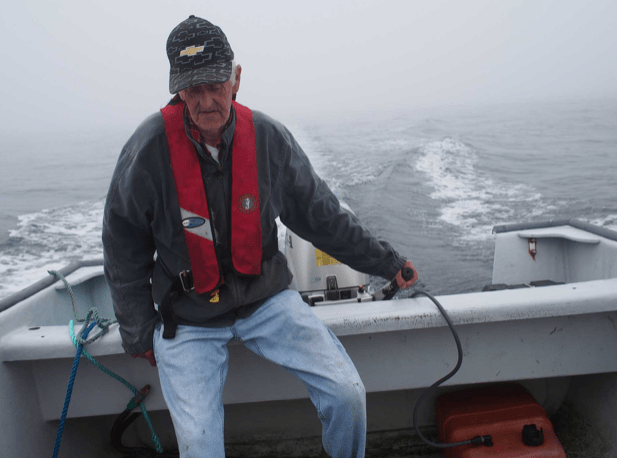
Thanks Bill Jarvis, an original Flat Islander, for a wonderfully navigated boat ride in dense fog with just watch and compass.  And to John Ballantyne for use of this photo.


Island Figures

Blog3 7 2016A

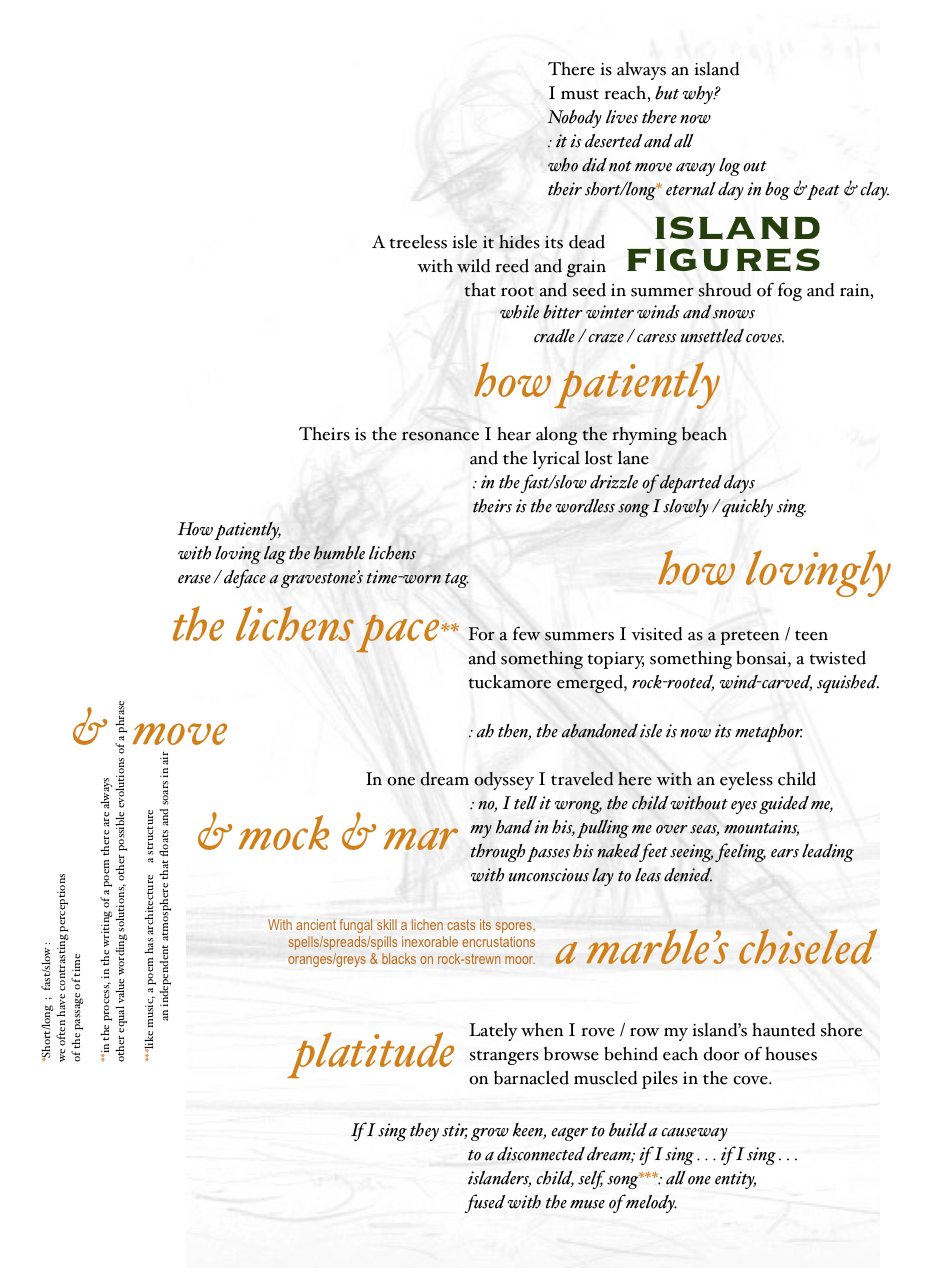
The poetic form here, fluid / flexible, verges on extreme.  Main theme content of abandonment is extraordinarily compressed.  The overall work is poem as process: and continues from previous blogs with the idea that the processes of poem making can form a subordinate poem(s) within the main poem; that these interlinear poems can be in italics, or indicated by a change of typeface or typeface colour, or foot-noted at right angles to the main text; and that the interlinear can also be an independent but supporting and related visual image: poetic extension, not merely illustration.

Blog3 7 2016B

Once Upon A Paradigm

Post28B

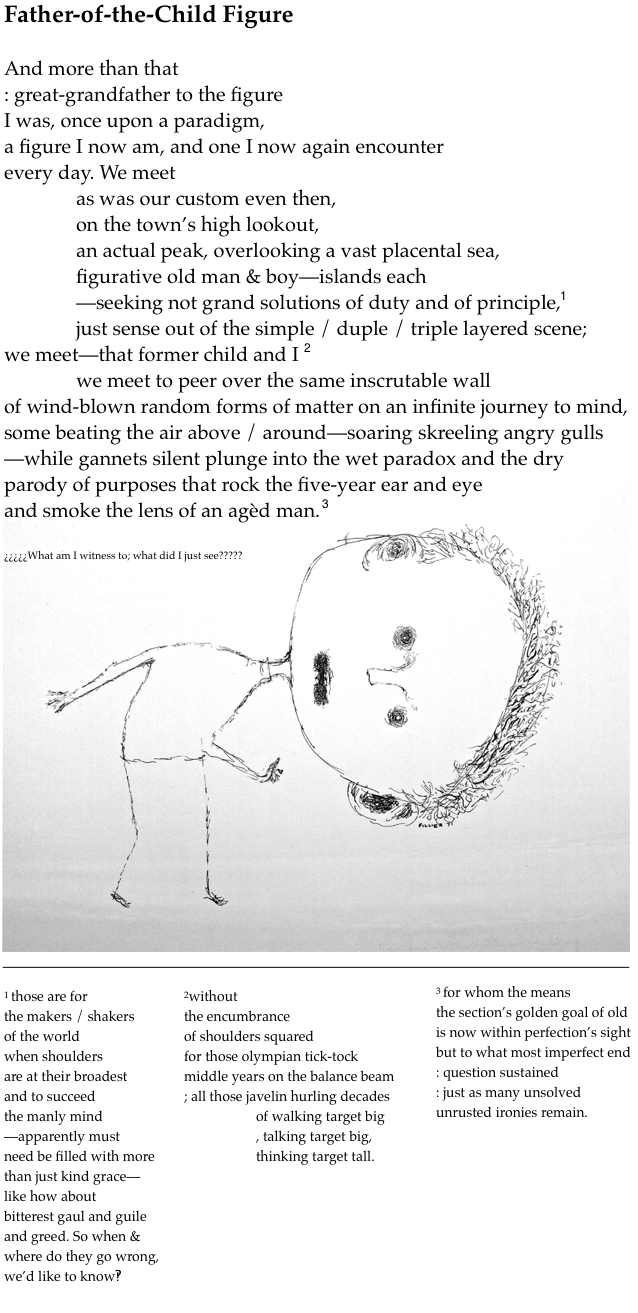
We all have interlinears, thoughts within thoughts within thoughts.  Ideas that have contrasting / or supplementary / or complementary content.  They can be words.  They can be visuals.  And it doesn’t help the cause of truth to use a lawyer’s reductive logic and pretend perceptions can properly be, or must needs be, reduced to expressions black and white.

Simplicity and complexity dwell in the same house; the same sentence; even within the same phrase: good & evil; love & hate; flesh & bone.  A poem with footnotes is a possibility for these interlinears especially when each footnote itself is also a poem or verse; and rates among other means I have used to vary the structure of poems upon a page.

Post28A

The Brutal Loveliness of Oxidizing Forms


Post 27B

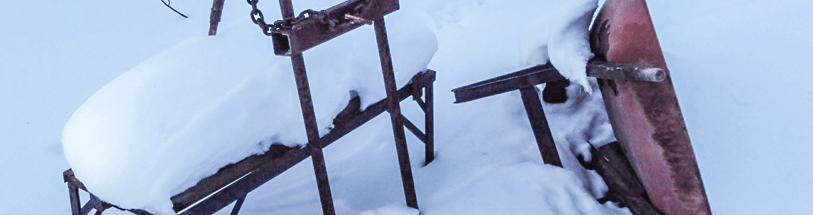
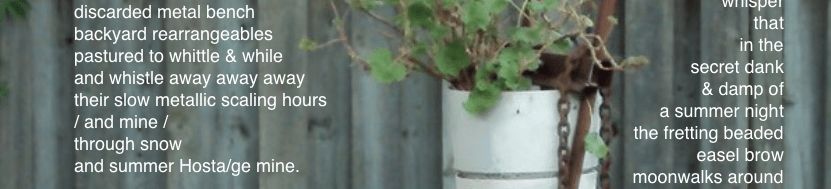
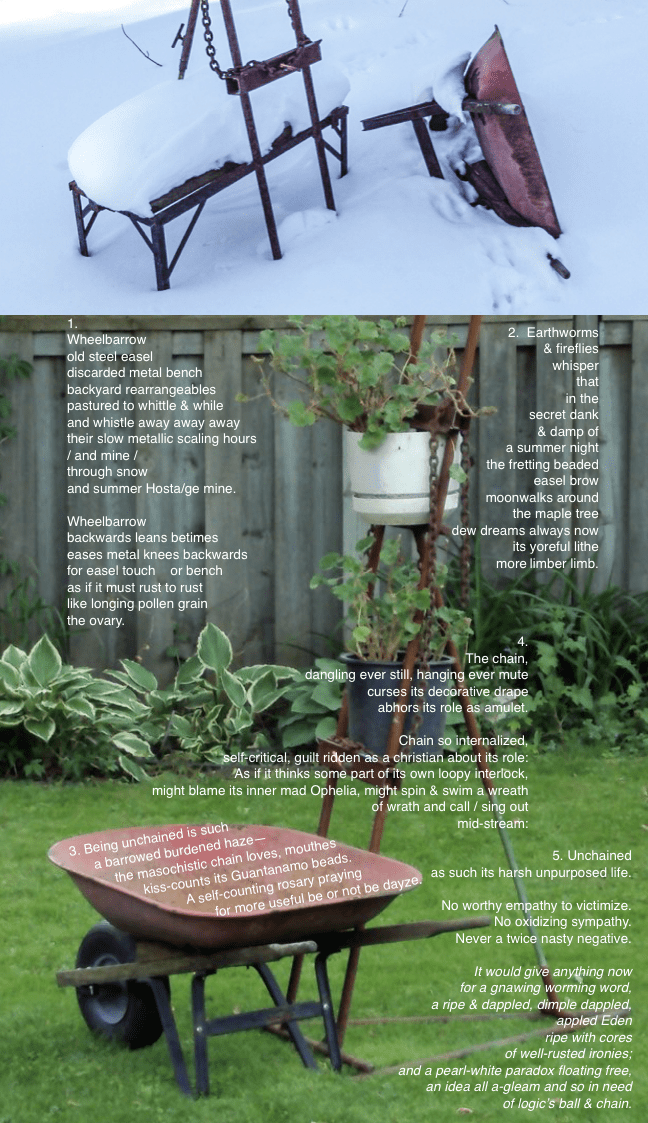
Chain. Wheelbarrow. Easel. Bench.  And of these four only the bench is still fully functional. In recent years I’ve reassigned all four into one adjustable aesthetic unit—a backyard assemblage with a prime function as art.  Here are two contrasting pictures which illustrate their service as year round objects of contemplation and display.  The images also show how the mind can use objects as scaffolding or skeletons to receive other oxidized artistic imaginings, meditations, reveries.

Post 27C

Post 27A

Dactyl Addict

Post26A

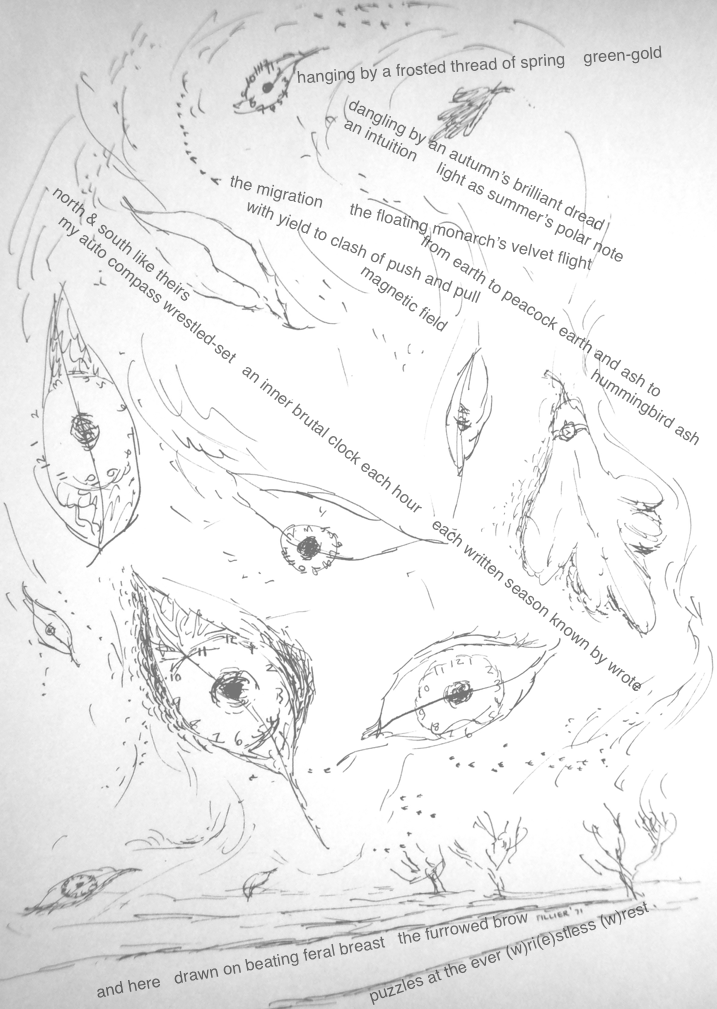
“Dactyl” for certain word rhythms, and “addict” for my long-term obsession with words.  Also, by association, a Pterodactyl is an ancient flying reptile and serves -like the poem- to provide the “winged flight-fingers” of this poem and its links with themes both distant past and current.

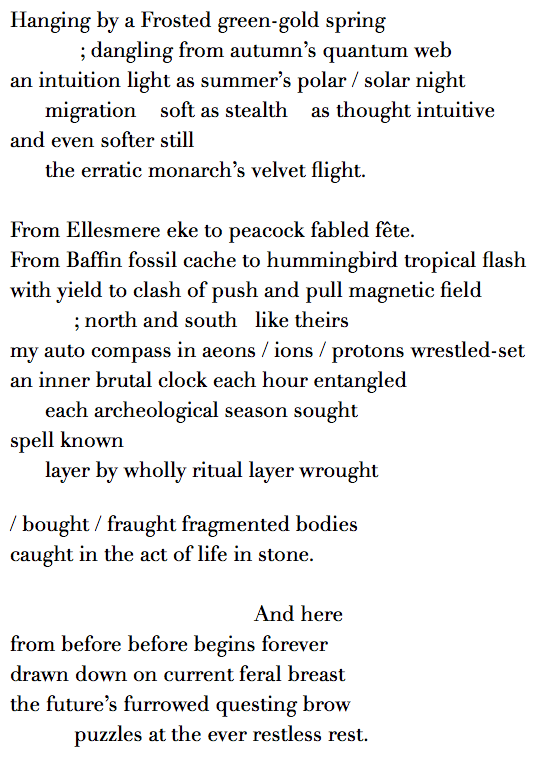
First, here is my original drawing from 1971 with its recently  superimposed poem(2015), followed with a more evolved version of the poem itself (2016).  I fancy it as an interesting disclosure of how a single act of creativity can arrive at varied outcomes & expressions.

Post26B

Post26C


Kitchen Figure, NL

Post 5B

Fiddles and button accordions still grace many Newfoundland and Labrador kitchens.  Not only because they evoke pleasant visual recollections of a past culture, but because they can be put to good use if a few friends drop by and tease / beg / bribe / cajole the host into a few toe-tapping tunes.

My maternal grandfather played both instruments, though I mostly recall his fiddling that followed a particular United Church Ladies Aid Supper/Social one evening in late July of 1950.  The place: Flat Islands, Placentia Bay, NL.

After the sober, well-blessed, well-partaken, and typically abstemious Church Supper and Crafts Sale had raised the required funds, the long communal tables were taken apart and the centre of the school hall emptied of tables, desks, and chairs.  They were stacked against walls or moved into the next classroom until enough space was available for a Square Dance.  The term “Square Dance” was acceptable as it implied something formal, something full of etiquette and widely-accepted rules; whereas the word dancing, like card-playing, was generally avoided as it had something licentious and sinful about it, especially whenever it found mention in a Sunday sermon.  To this end I’m surmising the word “scuff” evolved to replace “dance” as it, scuff, implied exercise rather than a purely self-indulgent pleasure.

Despite the word dancing being so overloaded with guilt, and despite there being only two actual Square Dances in the evening, one fisherman accepted the role of spoons and foot-stomp rhythm; another the push/pull bellows of a button accordion; for a ballad someone was always ready with mouth-organ, guitar and a local rendition of Wheeling West Virginia’s “Your Cheatin’ Heart” or “I’m Movin’ On”; but for the most part,  Albert, my “Pop”, as we called him, rose to the incoming tide of the dance and fiddled until that tide, just like the one in the beach, receeded hours later.   Much to Grandma Jane’s chagrin, though, and reverting to an old habit he’d sworn off, he also dragged on a cigarette or two, and whet his whistle from a secret little canteen that made the rounds.

With sunset, and oil lamps lit, those presbyterian feet grew wings at the ankles.  And, like many of the top two buttons on the blouses, and the mens’ shirts with their sleeves also rolled up, windows and doors were loosened to lessen the body heat from a full house, and disperse the dust scuffled upward from the foot-worn, generations-worn wooden floor, despite its recent and thoroughly diligent mop and scrub.

And that is where another memory kicks in and dominates my recollection of that dance: nobody’s aunt in particular, but everyone’s adorable community aunt in general, a very agile, very senior Aunt Polly, in a polka-dot blouse (although, to render it more precisely, there were no dots but heads of black roses printed on white satin) danced in a trance.  White hair tightly permed, with her scuffs, and swings, and wheels and swerves of black roses, she captured everyone’s eye as she served up her energies like alms to the wee hours of morning—so I’m told: this 10-year-old got dragged home early, got the rest of that yesterday’s tale by well garnished hearsay, the well-greased clothesline way.
Post 5A

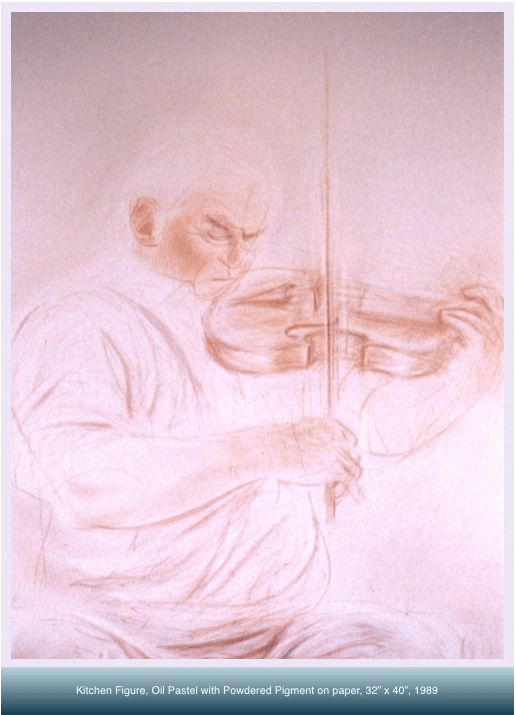
The figure in the attached drawing is not a portrait of my grandfather, though he was of that body type; nor is it an embodiment of Rufus Guinchard, a very well known NL fiddler from the 1970s and 80s who toured the world with fiddle, with Clyde Rose and other Breakwater Pressers, literally selling NL jigs and reels internationally, as well as published books; and it very definitely is not the rake thin Emile Benoit who was as clever with his mouth scat as Ella Fitzgerald.  His infinite repertoire of tunes, often included his own compositions, or spur of the moment inspiration.

No.  And it isn’t a drawing studied to death from a model in a studio.  Nor photo based.

Like one of Emile’s electric scat-singing fiddling moments this is an innovation, a drawing “on the wing” and very much an Aunt Polly off the cuff / open-bloused scuff.  It’s a drawing summoned up from memory, intuition, and imagination.  So off the cuff as to be one of a kind.  It’s one of my personal inventions.  I have done quite a few of these Scott Scats.  The lines and infinite little markings and squiggles are all drawn in white oil pastel on white paper.  The deliberate goal is that the artist does not clearly see what is happening on the paper, doesn’t see where these absorbent, invisible oil pastel markings have built up deposits in scuffs, and scumbles, in stumbles and in false leads.  Then the artist takes a large plump makeup brush, loads it with tempera powder, and charges with the élan of an elderly Aunt Polly onto the dance floor of the blank page.

Depending on how richly the oil pastel went down so do lines and tones appear when the loaded tempera in the brush drags over and gets sucked into that oil pastel.  As the drawing begins to emerge magically—like a photo in a developer tray—the artist begins to see where it would be best to further develop shapes, shadows, forms.  Or invest in a colour change with another of the set of four such brushes—one for each of black / blue / yellow / red .