Figures Fillière 1(b)

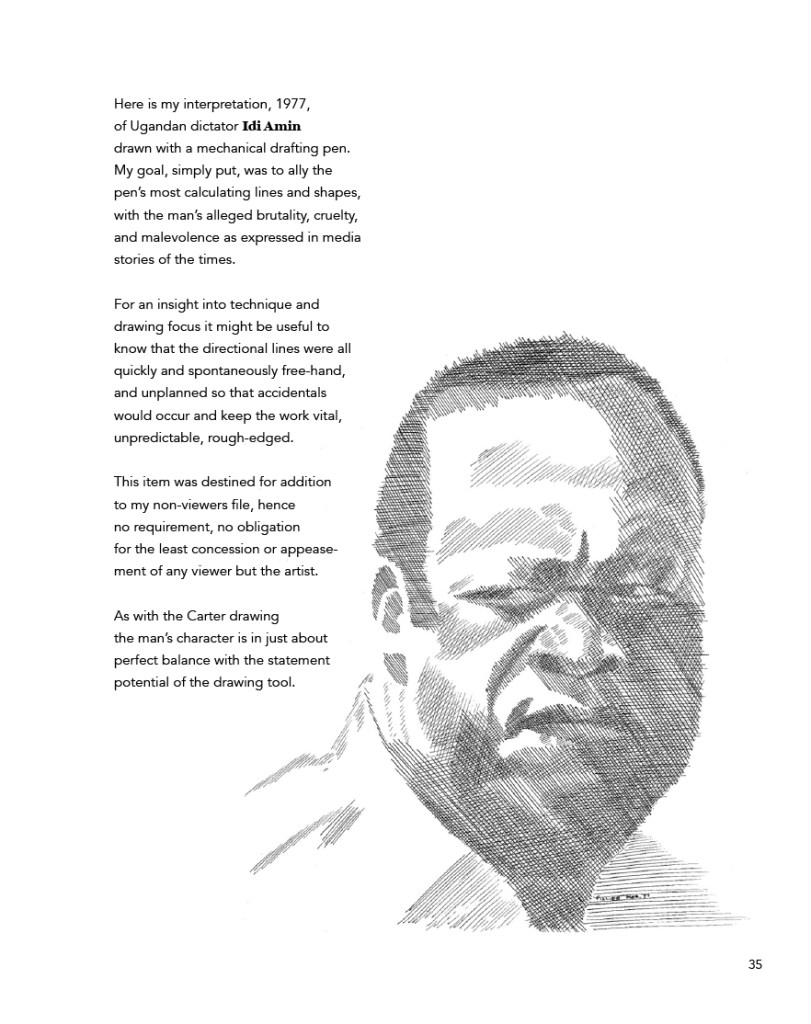
This is page 35 from Figures Fillière 1, available at amazon.com / books / Scott Fillier

It is one of a number of faces shown in the book and drawn in many different media, to demonstrate in this instance, that a mechanical drafting pen can be used to produce a landmark and powerfully expressive image one doesn’t usually associate with the output of that pen. All the more reason to investigate its off-beat potential.

The left-hand page of this two-page spread is of US President Jimmy Carter as the perfect opposite in personality type, and, in drawing tool effect.
Figures Fillière 1

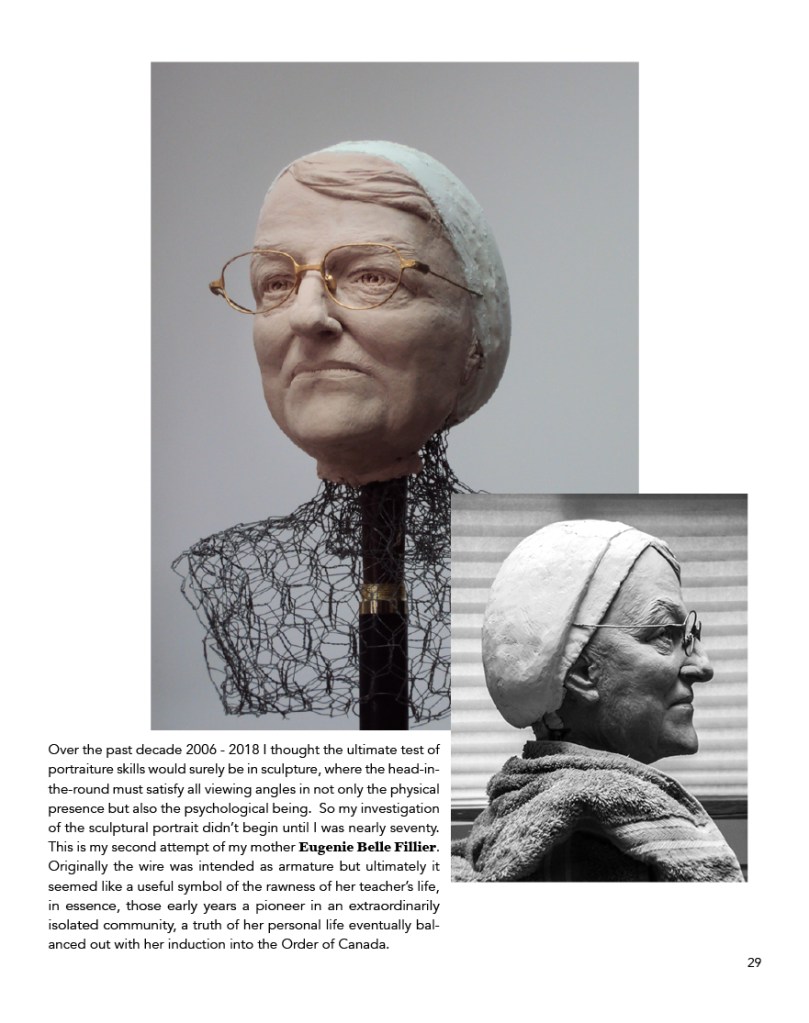
This is page 29 from my recently published Figures Fillière 1.

It explains the processes, thought and sculptural, whereby this sculpture in wire, plaster, and plasticine of E. B. Fillier now exists. The black and white photo, since it lacks colour cues, is especially intriguing as its presentation of reality challenges the perceptions of many viewers, who knew and were pupils of this teacher, to ask whether this isn’t a photo of the subject rather than of the sculpture itself.

Book is available at amazon.com /books / Scott Fillier.

Drawing Jenna

This time I will insert one of my YouTube videos, a drawing of my niece Jenna –three years old this week– but drawn a couple years ago.

My prime goal was to avoid cute; difficult to do in drawings with very small children, but the reference photo was all about her unusual sleeping pose, a superb, very unusual, neatly folded, accordion-like composition. I would only need to follow its lead and focus on that dynamic pose she had been so used to, and which had been so practical in her previous life.

As the drawing went forward I photographed its progress moment by moment, eventually arriving at what seemed a satisfactory finish. The drawing resolved itself without effort, and later on it was very easy to convert its dozens of stills into a video format.

For the music also, since I so enjoy creating the odd piece, I decided to take the most challenging route and discover whether something in a jazz mood might be less cute, less cloying than a lullaby. I think I found it.

The blend of image/music is surprising and, personally, is as close to flawless as I could hope.

Figure Donning Waterproofs

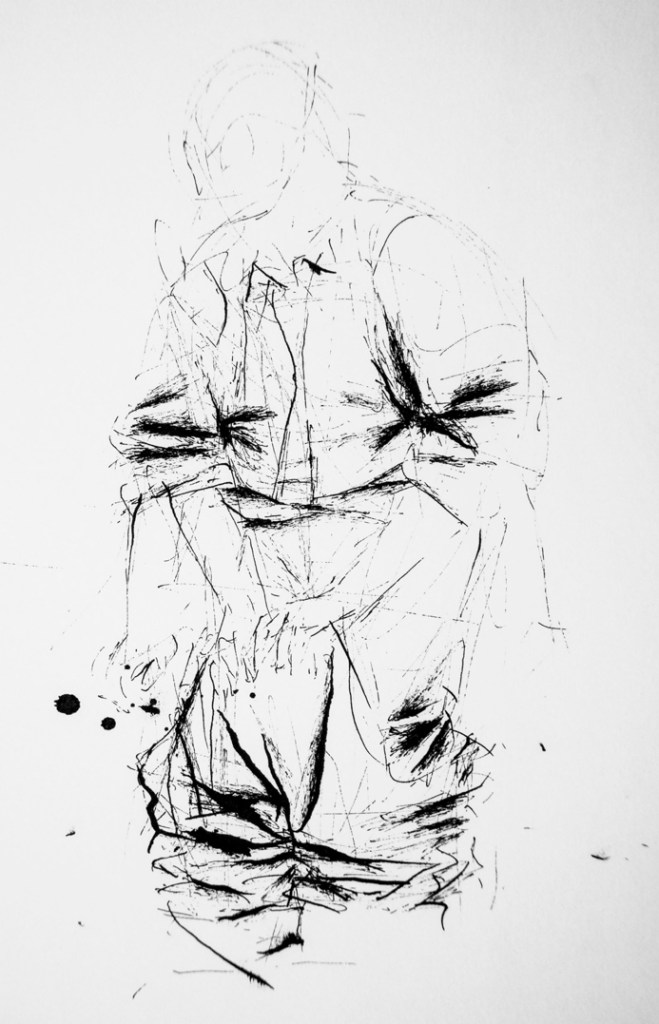
This is one of my favourite ways to initiate and complete a sketch.

I don’t want it to be photographic so I am relying on a memory of a situation I thought had great visual impact: a fisherman pulling on his waterproof pants. A photograph of the action would actually impede my drawing because I would get entangled in its details; when I only want the completed drawing to focus on abstracted essentials memory is the best tool as it will leave room for a creative remembrance.

Drawing with a dry/semi-dry pen allows me to lightly indicate the figure and work out good proportions. After which I go directly to the heart of my intent—fluid pose and positions of arms/legs plus the lines of the clothing which will describe the critical motion. Those centres of clothing stress I build into strong visual presences with a very careful eye to placement, to composition, to textural variation, to maximum effect created with minimal input. This allows ample room for imagination and suggestion to complete the work in the viewer’s eye.

Fillière © Apr 5 2019

Shoreline Form

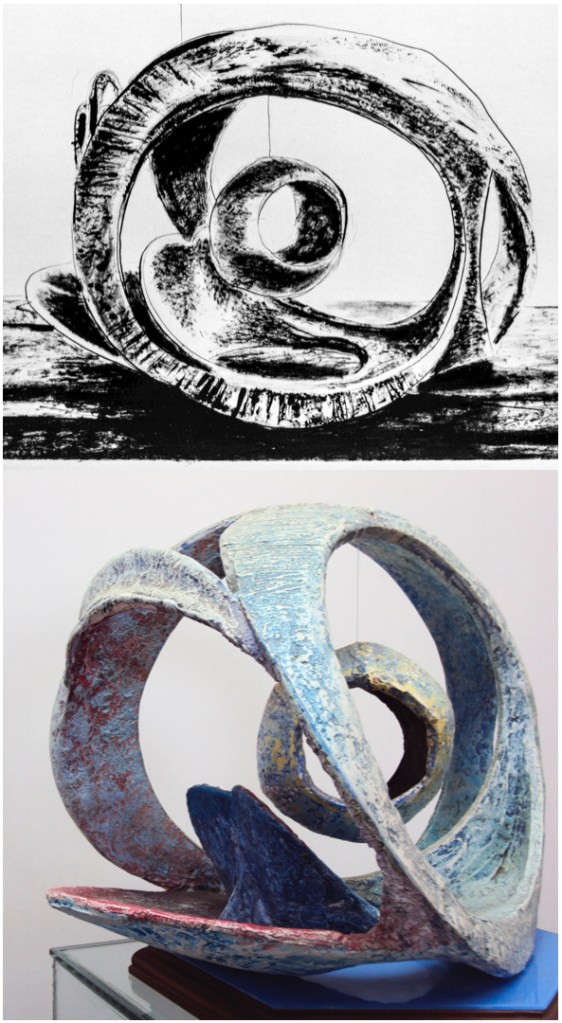
This is a sculpture made using basketry reeds as armature to sketch out its form. It was made without pre-planning as I wanted a form that would freely evolve, and one which would work visually from all positions around it. The armature was covered with many layers of plaster, paint, and paper towels all bound together by the wetness of the paint, until it became this curious fish / skull-form with a dangling, floating, paradox of an eye that can be both pendulum and rotational.

The surface of the materials dried out to a firm bone-like density that can be worked in many ways. So I considered it all-in-all a satisfactory artistic experiment.

The drawing followed after the sculpture—a record of the project as an illusion of a 3-D form on a flat paper surface; which is in fact what the photo also does to the skull: both presenting and denying at the same instant, its existence as a form in real space but eliminating the dimension of time. It’s for the eyes only: only in your imagination can you now move around the object or set its eye in motion.

Fillière © March 22 2019