Sculptural Figure

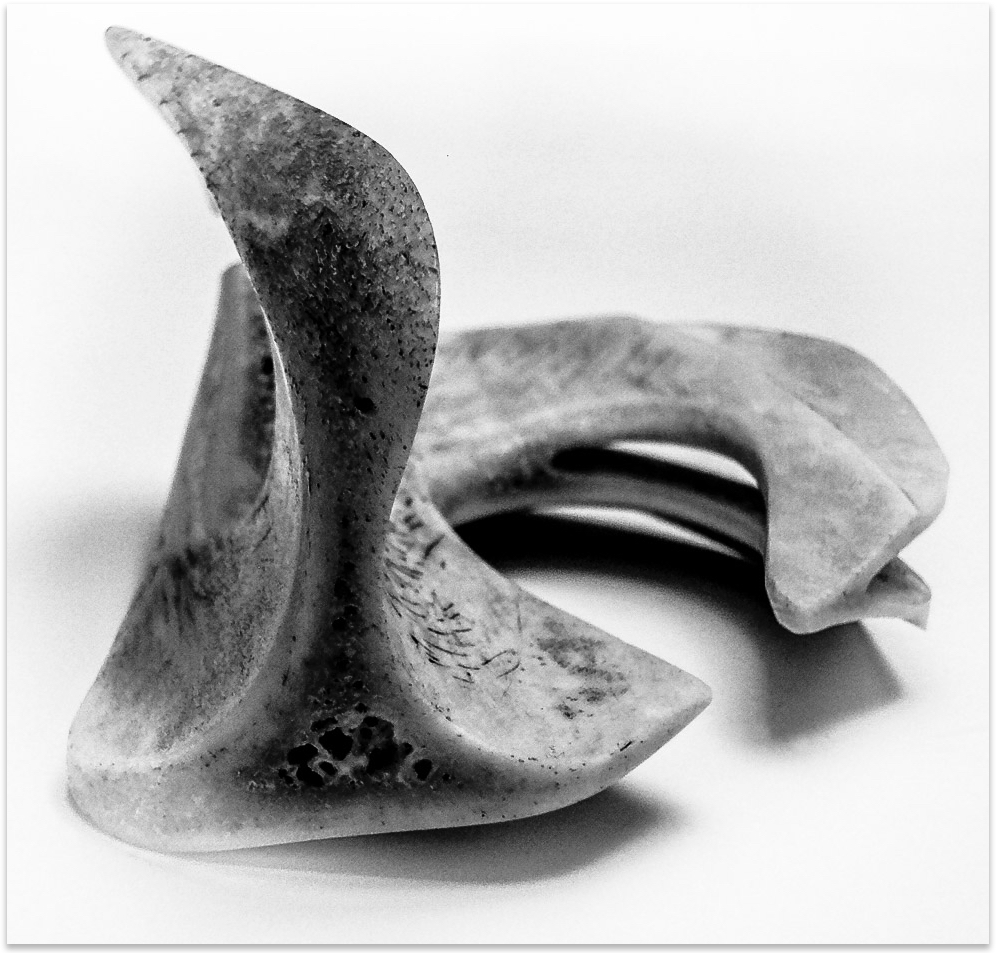
I think of this palm-sized bone sculpture now, more or less as a personal art motif that is always poised and ready for a new closeup photo from any angle.

I saw its potential after removing it as just a chunk of solid bone from a pot-roast 36 years ago and immediately began removing cartilage, rounding edges, cutting ovals into its planes to let in air and light, enriching its surfaces with scratched markings; and while I made the final adjustments to its form a dozen years ago, have since shifted the artistic exploration over into photography as its shape and form is so varied that it always offers up an attractive aspect in just about any lighting cast upon it, or any lighting that can be manipulated in a digital darkroom.


SculpturalFig

Kingdom Divided

The Kingdom Is Divided Inch by Bloody Inch

Three separate surfaces are used to compose this intricate abstraction. A Plexiglass square used on both its front and back sides leaves enough open areas for a backing board to create behind them a deep atmospheric space. In most instances abstractions deliberately avoid creating spatial depth, here deep space is celebrated as the natural necessary component it is.

Our front surface has the painted bright yellow triangle—lower left quadrant, while two smaller triangles, with the darker values of yellow, use the upper right quadrant. The dominant blue and red triangles, and the yellow and black half-circles, just above centre, are painted on the inner side, while a backing board spray-painted in muted greys, blues, and pale corals also carries the pasted down orange triangle and orange half-circle visible through the translucencies of the Queen and King triangles. 

Qualities of paint and pigments range from absolutely opaque to the most delicate translucencies both in sprays and fluids. Plexiglass brings an incredible luminosity/numinosity to colour not available when painted on canvas or board. Geometric edges ride/soar/float against/over/under free-reign, free-flow forms. And the other complex dialogue about abstract spatial perceptions, and its advancing, recessional colours/tones, and between positive/negative forms is royally maxed out. 

While these dynamic elements were being brought into a worthy balance my mind couldn’t resist romanticizing them as a levitating Red Queen and her foot-loose Blue King parting company and beginning to divide their quantum world spoils.

Red Queen

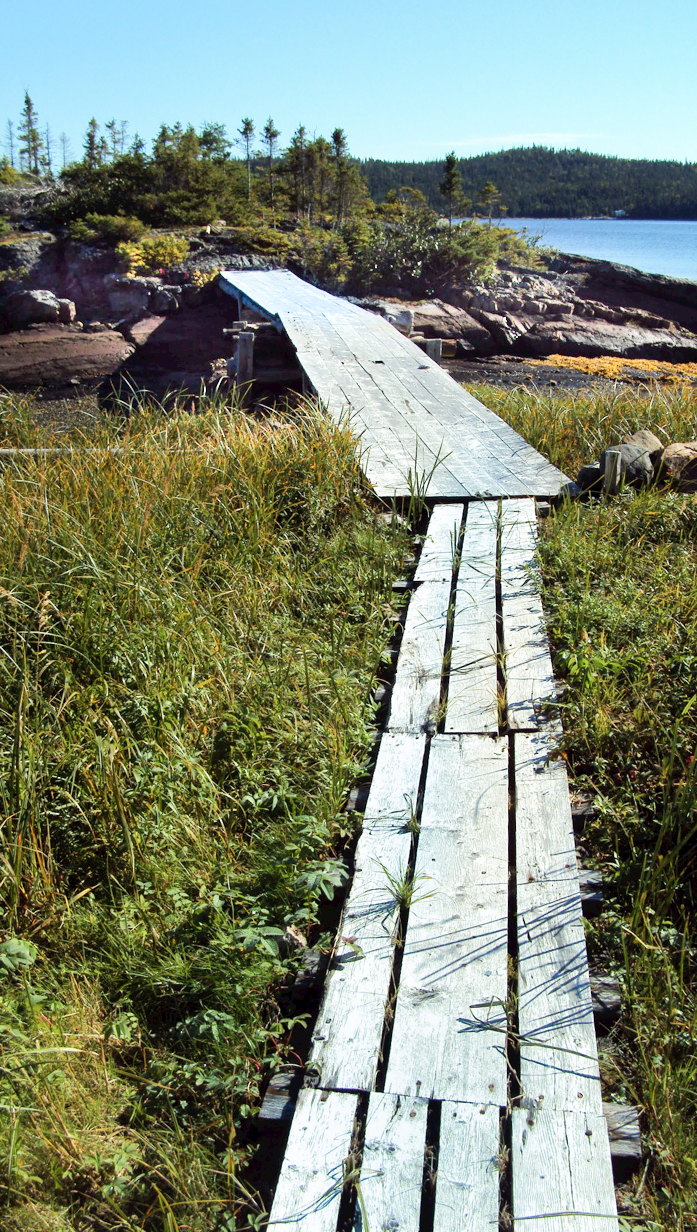
Boreal Trees, Oceanside

North Atlantic, Canada Bay, Great Northern Peninsula, NL.

This scene is just a few steps away from the one in my earlier blog post: Ebb Tide.

The home-made walkway of a nearby cottage crosses some boggy turf and a narrow passage way to a rocky island; and if you face into the sun at the end of the boards, you encounter the low tide view of that previous post. Salt spray, high winds, and lack of depth of soil will prevent those trees from being little more than phenomenal shrubbery in that fabulous rock-scape.

And of course, at highest tide the water rises to just a foot below the boardwalk.

Boreal ForestOceanside

Whistler

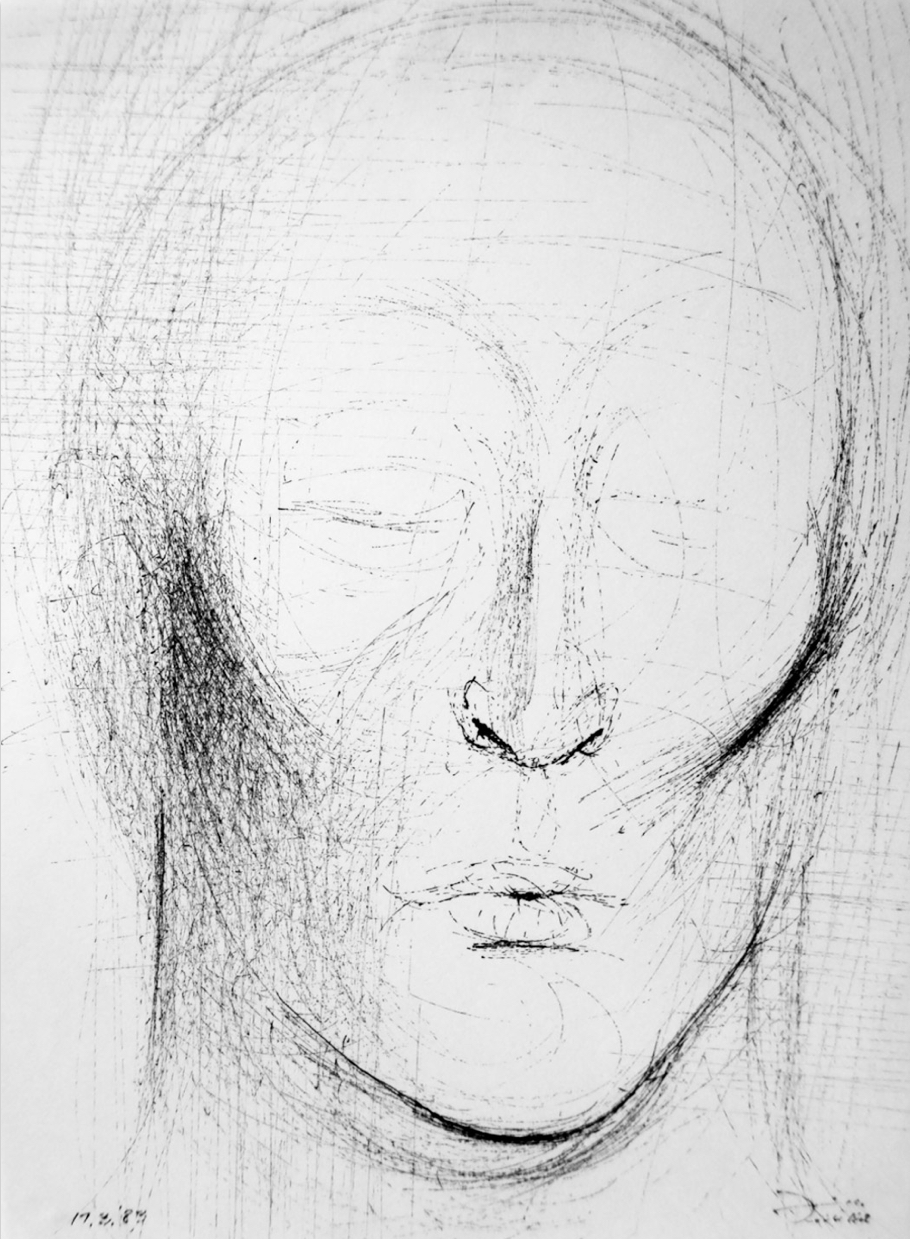
This, a half-year later, was the second and only follow up to the previous drawing.

It is also with mechanical pen on a Japanese printing paper, but this time it’s a male head, not a personality study, but focuses on those parts of the face involved in the sensational act of producing brilliant, flute-like, bird-like, sun lit tones.

Whistlehead

Figurehead

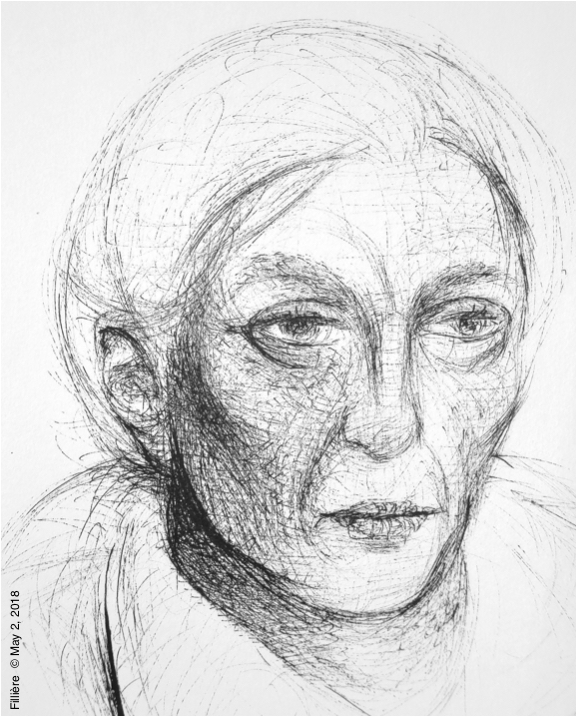
The female head shown below is an experiment drawn with a mechanical drafting pen. It is on an oriental printing paper with a considerable nap to its surface, which in turn pushed the pen into an unexpected, unpredicted character of line. Essentially the tool was suspended vertically between my fingers and thumb and moved lightly enough above the paper to create marks without ripping the fibres, which likely accounts for the poetic restraint and the rhythmic, arcing of lines.

No model was used, either in the flesh or by way of photo reference. And no preconception followed, other than to aim for a face, and allow the accumulative marks to determine which personality would arrive, and begin to grow on the page. After the fact I realized that my sculptor side had responded by laying down course upon course of contour lines; that both Giacometti, in his studies of Annette, and Henry Moore, in his studies of sheep, and in some of his war-time subway figures, had arrived at similar approaches before me; hence, though I loved the powerful result, I made only one other companion study.

The most startling aspect of this drawing though, even a dramatic personal surprise for me several years after this drawing, came when my relocation from one Canadian province to live in another, brought about numerous encounters with a local artist-writer of whom you could easily have said this was her singular, penetrating pose.

Victoria